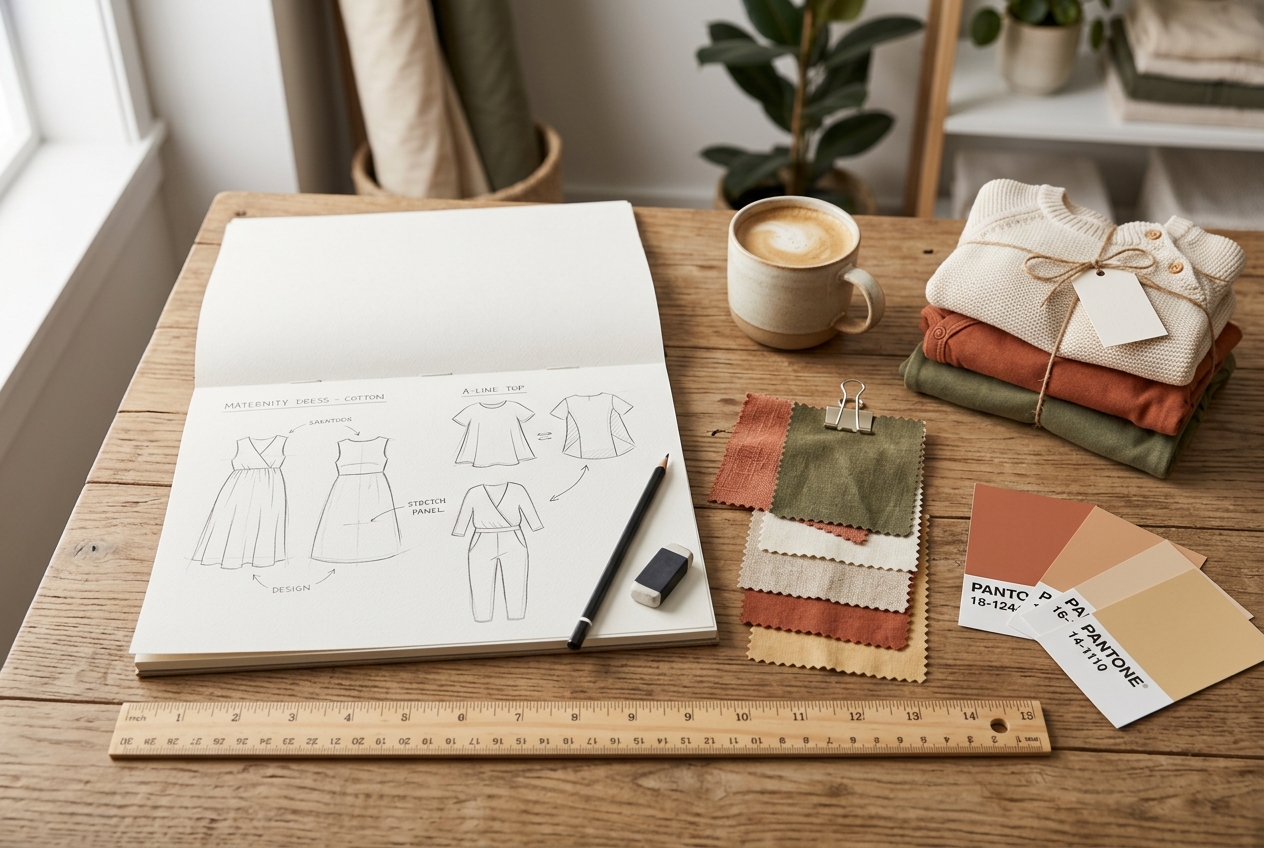
The most common mistake when opening a maternity boutique is ordering "a little bit of everything" for the first order. This spreads your capital too thin and leaves you without enough size options in any single category. A narrower but deeper starter stock produces far better results.
1. Get clear on your category mix
A starter collection typically spans these four categories:
- Everyday wear (dresses, tunics, pants) — the backbone of the collection, usually 50-60% of the mix.
- Nursing-transition pieces — for customers who want maternity, postpartum and nursing needs covered under one roof.
- Loungewear/sleepwear (pajamas, nightgowns, postpartum sets) — a lower-competition segment with steady demand.
- Outerwear (coats, cardigans) — seasonal, lower quantity, but a useful complementary category.
2. Build your size distribution around your customer profile
Maternity sizing is based on pre-pregnancy size. Most suppliers concentrate assortment boxes around sizes 36-38-40-42, since that's where demand clusters; sizes 44-46 sell in lower volume but should always be stocked. If you know your customer base well (for example, if you serve a younger-mother-focused area), you can fine-tune this ratio together with your supplier.
3. Start with an assortment box, not a full collection
For a brand-new boutique, the lowest-risk path is to start with an assortment box covering a few styles across all sizes. This tells you which style, in which size, is selling at what speed — data that makes your second order far more accurate.
4. Set aside a reorder budget
The second common mistake new boutique owners make is spending the entire budget on the first order. Keep part of your budget in reserve so you can reorder your 2-3 best-selling styles within the same week after your first order lands. If your supplier keeps year-round stock, this reorder process is straightforward.
5. A cost planning framework
Rather than giving a fixed figure (every supplier and market differs), we suggest thinking about your budget in these proportions:
- 60-70% initial stock (assortment box + complementary styles)
- 15-20% reorder reserve
- 10-15% visual/display materials (hangers, tags, packaging — usually shelf-ready from the supplier)
Adjust these ratios to your own capital and your supplier's MOQ; the goal is to avoid spending everything on the first order.
Next step
Once your category and size plan is clear, work with your supplier to build the assortment box contents together — MOQ and size distribution are planned around your specific request.