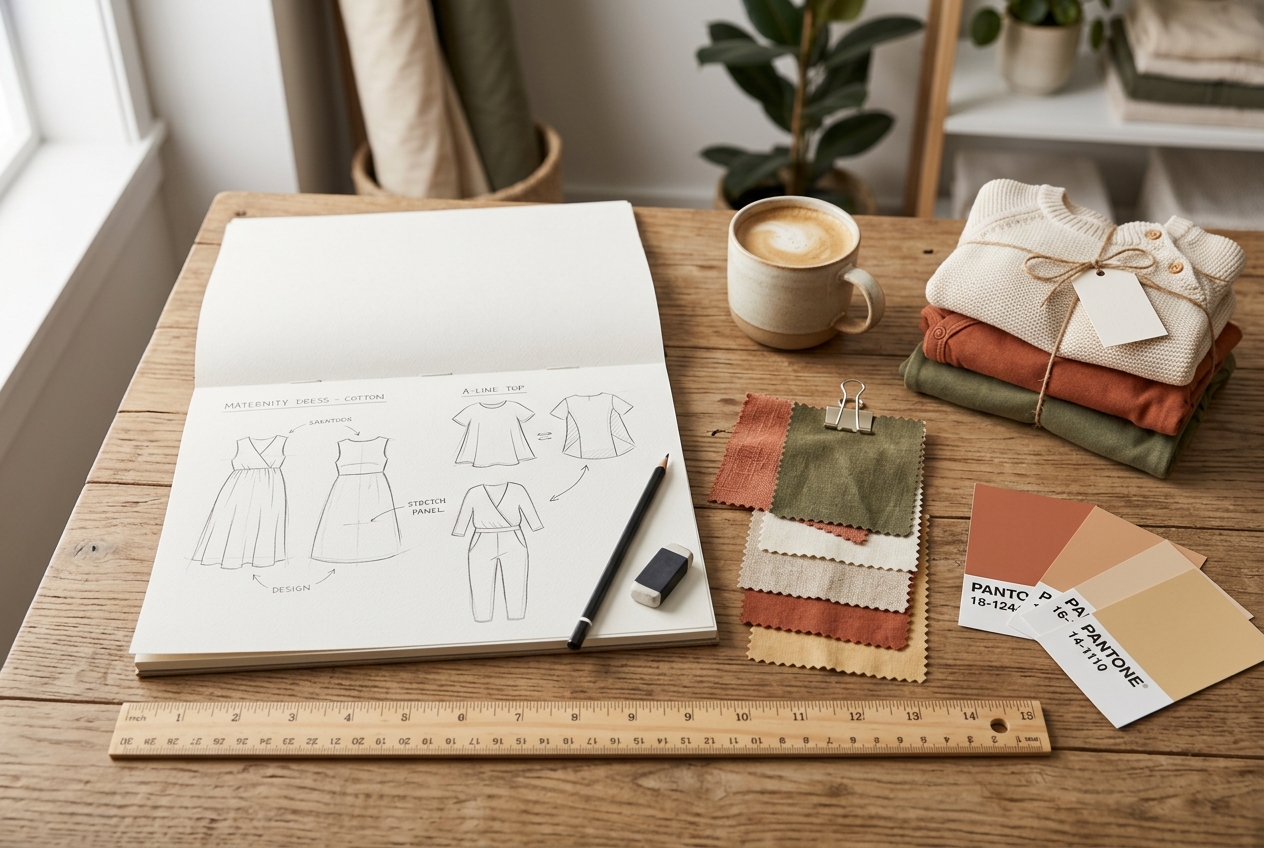
If you're considering producing maternity or nursing clothing under your own brand (private label), knowing how long the process takes and which documents you need to prepare makes a big difference on your first project. Here are the four stages, from tech pack to delivery.
1. Tech pack — the technical language of your design
A tech pack is your design translated into a producible format: a measurement chart, fabric specification, stitch details, color codes and trim information (zippers, buttons, label placement). If all you have is an image or a sketch, don't worry — reputable manufacturers offer support turning that into a full tech pack.
Important point: in maternity wear, the tech pack must always include an adjustable waist/belly panel detail and a trimester-fit note; this is a technical requirement that differs from general apparel.
2. Sampling and approval rounds
Once the tech pack is approved, the manufacturer prepares a first sample. Always inspect this sample physically (ideally trying it on someone across different size ranges if possible). One to two revision rounds is generally normal; each round checks measurements and fabric drape.
3. Bulk production
Once the sample is approved, bulk production is scheduled based on your order quantity. At this stage, clarify the following with your manufacturer:
- The exact delivery date and possible delay scenarios
- The quality control process — how many inspection stages are there?
- Color/fabric batch consistency (can there be color variation between lots?)
4. Labeling and shipping
The final stage in private label production is making the product shelf-ready with your own brand's label, care instructions and barcode information. A good manufacturer builds this into the production process rather than leaving it as a separate task for you.
How long does it take?
Timing depends on the complexity of the style, fabric availability and order volume. As a general framework: tech pack and first sample take a few weeks, revision rounds add a few more, and bulk production requires additional time depending on order size. Always get the exact timeline from your manufacturer in writing.
The most common mistake
The most common mistake is skipping sample approval and going straight to a large-volume order. The sample fee is a small cost; the cost of a large production error is far higher. Working with suppliers who credit the sample fee toward your first order further reduces this risk.