Trend forecasts aren't an exact science, but the broader directions observed across the textile industry help wholesale buyers make sharper collection and stock decisions. In this article we share both the directions we're seeing and a practical season planning calendar.
Observed directions
1. Multi-functional pieces
Demand is rising for "one piece, three stages" products that work across pregnancy, postpartum and nursing. Styles that combine an adjustable waist/belly panel with nursing access let boutique owners serve a wider customer base with fewer SKUs.
2. Neutral and natural color palettes
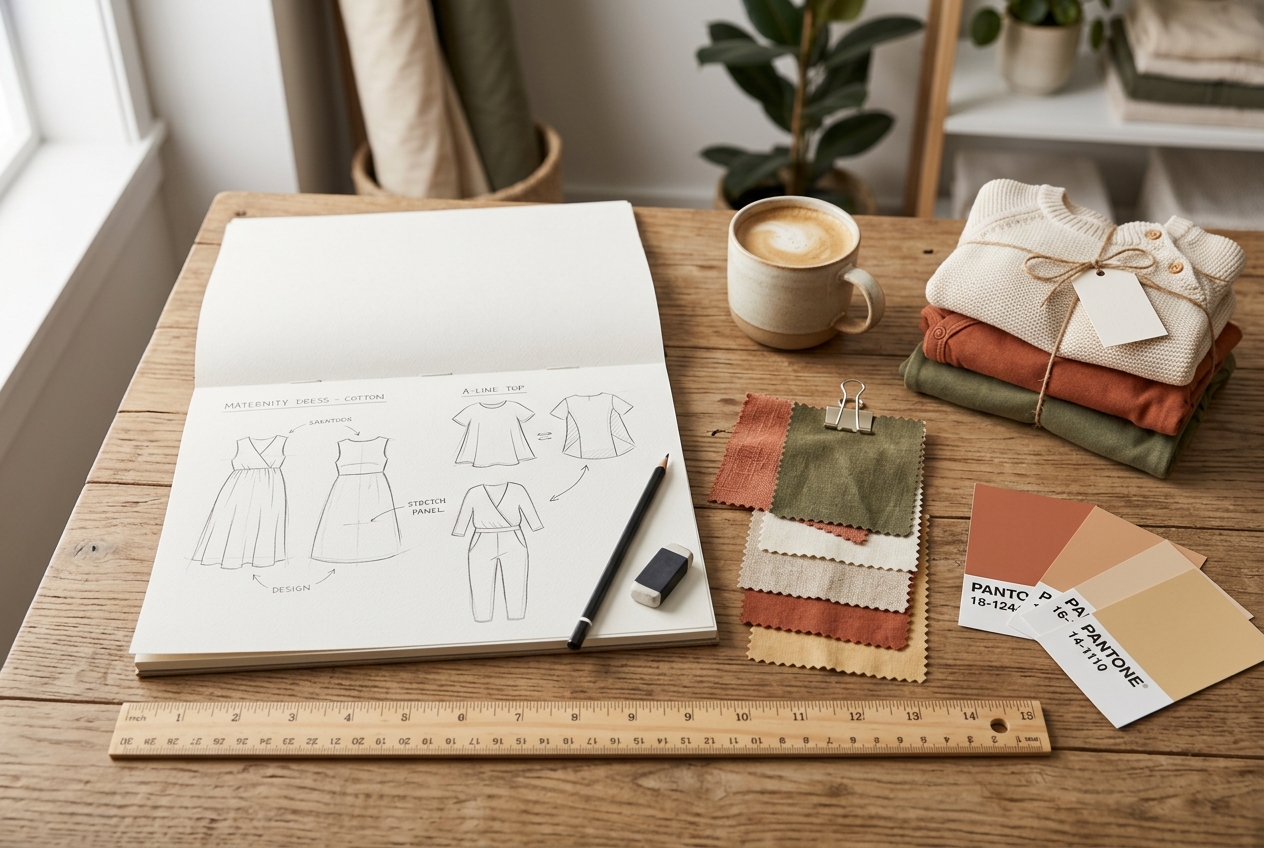
Alongside classic pastel tones, earth tones and neutrals (beige, stone, deep green) are giving maternity wear a more "everyday wearable" feel — which also makes the product feel usable after pregnancy as well.
3. Sustainable and certified fabrics
Boutiques selling into, or aiming to sell into, the European market are seeing growing interest in products that highlight OEKO-TEX and organic-certified fabrics. This isn't just a marketing detail anymore — it's becoming a supplier-selection criterion for many European retailers.
4. Size inclusivity
Collections offering a wider size range (especially sizes 44-46) are standing out both for customer satisfaction and for reducing lost sales opportunities.
A season-by-season planning calendar
The calendar below is a general framework; adapt it to your own market's seasonal cycle.
| Period | Planning Action |
|---|---|
| Late winter / early spring | Sampling and tech pack process begins for the summer collection. |
| Spring | Summer collection production and first shipments; post-winter markdown/outlet planning. |
| Summer | Design and sampling for the fall/winter collection; tracking summer reorders. |
| Early fall | Winter collection production and shipping; year-end stock review. |
| Winter | Early design meetings for the following summer season; trade fair calendar planning. |
Why does early planning matter?
Even though demand for maternity wear isn't seasonal, production and fabric sourcing processes are. Popular fabrics can experience supply tightness, so starting the sampling and ordering process 1-2 months before the season begins significantly reduces the risk of delivery delays.
The one thing that shouldn't change
Trends come and go, but one fact about maternity wear never changes: the need for year-round stock. Pregnancy doesn't wait for a season — which is why keeping your core collection in stock year-round matters just as much as chasing trend pieces.